What Is Quality Assurance (QA)? A Complete Guide
Quality isn’t something you “add” at the end of a project – it’s something you design into every step. That’s where quality assurance (QA) comes in. In today’s competitive digital and manufacturing environments, QA plays a central role in building trust, reducing errors, and delivering consistent results.
This guide will explain what quality assurance is, how the process works, how it looks in actual business cycles (as well as the actual differences between quality control and quality assurance); common methods of quality assurance, how to conduct quality assurance; types of quality assurance by industry, and practical examples of quality assurance that can be put into practice.
Quality Assurance Meaning: What QA Actually Means
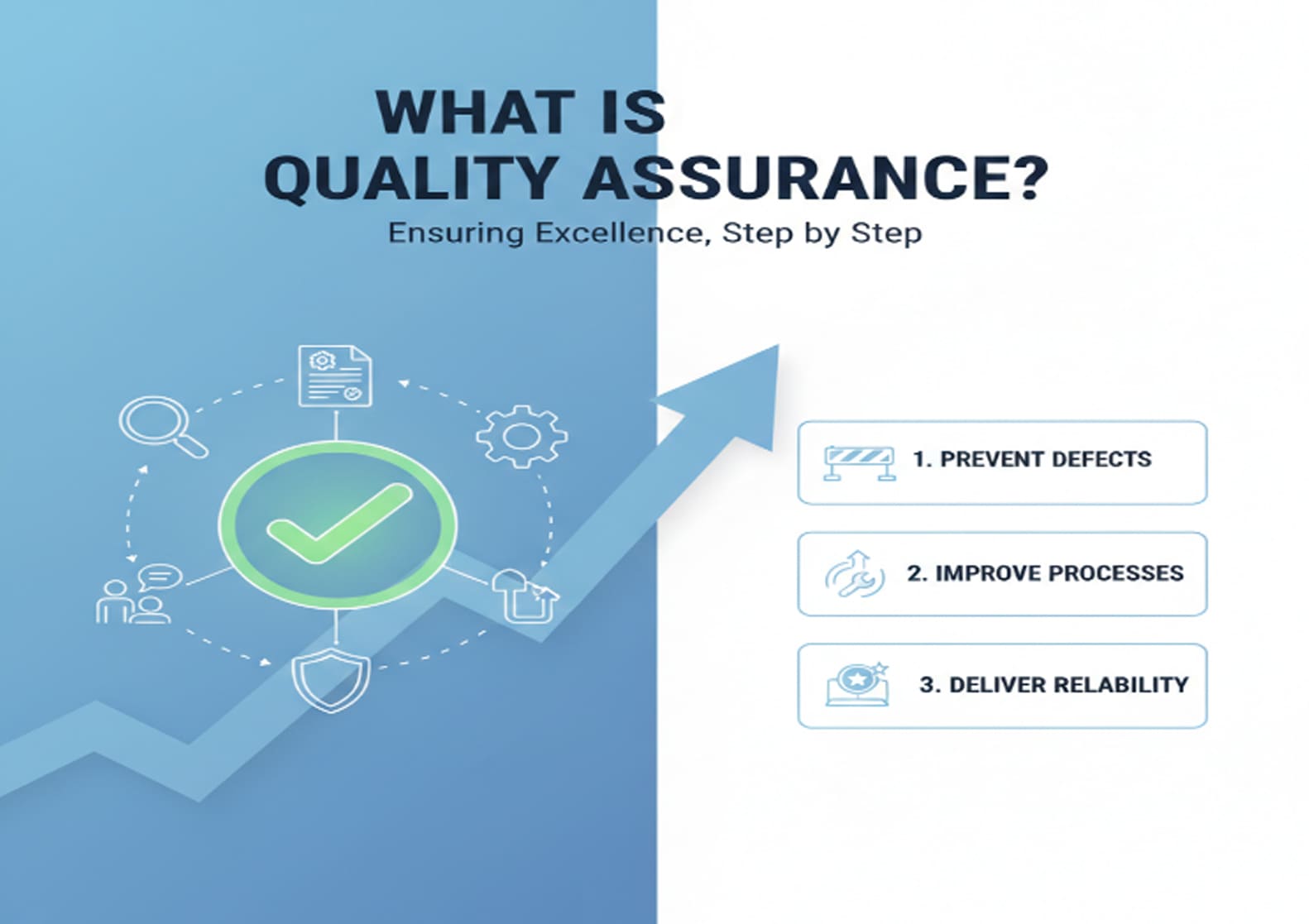
The quality assurance meaning refers to a systematic, proactive approach to ensuring that products or services meet defined quality standards. QA focuses on preventing defects by improving and controlling processes, rather than just finding problems after they happen.
According to the International Organization for Standardization (ISO), the quality assurance process is part of a comprehensive quality management system that uses specified processes to deliver consistent results and ongoing improvement. ISO 9001 defines “quality” as a characteristic of a process, product, or service that meets the requirements of the user and includes documented evidence of conformity.
According to the American Society for Quality (ASQ), quality assurance (QA) is any activity that creates confidence that a product will meet its quality requirements.
In short:
Quality assurance builds quality into the process, not just into the final product.
Note: Need reliable Software Testing Services? Our certified experts deliver 99% defect detection and on-time launches. Get a custom quote today
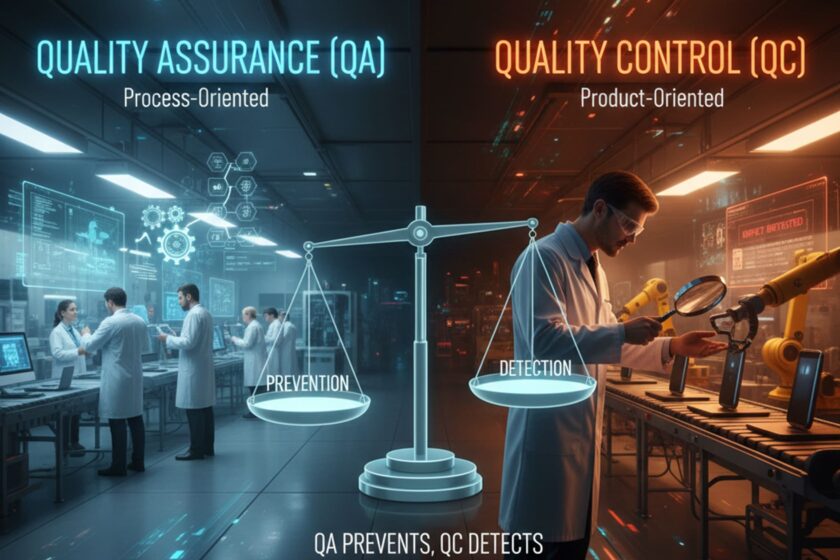
Quality Assurance vs Quality Control: Understanding the Difference Between QA and QC
The debate around quality assurance vs quality control often confuses. These two functions work together; however, they have separate, albeit complementary, uses.
Understanding the difference between QA and QC helps teams design better quality systems.
| Aspect | Quality Assurance (QA) | Quality Control (QC) |
| Focus | Process-oriented | Product-oriented |
| Goal | Prevent defects | Detect defects |
| Timing | Before & during production | After production |
| Example | Process audits, standards | Testing, inspections |
Quality Assurance prevents issues, while Quality Control finds faults. Strong QA reduces QC workload and lowers costs associated with rework and failures.
ASQ clearly differentiates between Quality Assurance (confidence in the process) and Quality Control (product verification), reinforcing that prevention is more efficient than correction.
Quality Assurance Process: How QA Works Step by Step
A structured quality assurance process helps organizations achieve consistent results. While details vary by industry, most QA frameworks include these core steps:
1. Define Quality Standards
The first step is to clarify what “quality” means for your organization. The quality standards should be determined based on your customers’ expectations, industry regulatory requirements, and your organization’s various goals. When quality standards are clearly documented, teams have a shared understanding of what success looks like.
2. Create QA Plans
An outline is a QA plan for establishing a quality process. A QA plan outlines: 1) Roles and responsibilities, 2) Tools to be used, 3) Quality checks to be done, and 4) Performance metrics to measure. A well-written QA plan enables projects to be executed without issues, allowing teams to react rather than preemptively prevent them.
3. Implement Standardized Processes
Standardized processes ensure that tasks are performed consistently across teams and projects. This includes documented workflows, guidelines, templates, and best practices. Training plays a key role here, as people need to understand not just what to do, but why it matters.
4. Monitor and Review
Processes must be monitored to determine whether they are being applied as intended by an organization, including through internal audits, peer reviews, and performance metric monitoring. Through this type of ongoing monitoring, organisations can identify quality problems early, before they become larger issues.
5. Continuous Improvement
Once processes have been implemented, quality assurance will continue through a variety of techniques. Teams need to routinely review their problems, pinpoint their underlying causes, and optimise their workflows to reduce the likelihood of recurrence. According to the National Institute of Standards and Technology (NIST), there are two primary ingredients for sustained quality and operational performance—process maturity and ongoing enhancement.
Quality Assurance Cycle: Continuous Improvement in Action
The quality assurance cycle is often based on the Plan–Do–Check–Act (PDCA) model:
- Plan: Define goals and processes
- Do: Implement processes
- Check: Measure outcomes
- Act: Improve based on findings
This loop will ensure that the quality of your work continues to grow, even as your needs change. The PDCA methodology is embedded in ISO 9001, which also supports the development of modern Quality Management Systems (QMS). In addition, it demonstrates its effectiveness in actual organisations across multiple industries.
Common Quality Assurance Methods
There’s no one-size-fits-all approach to QA. However, several common quality assurance methods are widely used across industries:
- Process Audits: The purpose of these audits is to ensure teams adhere to established protocols and standards. Audits help identify gaps between documented processes and actual practice.
- Standard Operating Procedures (SOPs): SOPs provide clear, step-by-step instructions for performing tasks consistently, reducing variation and confusion.
- Root Cause Analysis: This method helps teams understand why problems occur instead of only fixing surface-level symptoms.
- Peer Reviews: Having colleagues review work improves quality by catching mistakes early and sharing knowledge across teams.
- Process Mapping: Visualizing workflows helps organizations spot bottlenecks, unnecessary steps, and areas of inefficiency.
- Continuous Improvement Models: Frameworks like PDCA and Kaizen encourage small, ongoing improvements rather than waiting for major failures.
These techniques will guide improvements in how work is carried out, not just checking outputs.
How to Perform Quality Assurance in Your Organization
If you’re wondering how to perform quality assurance in a practical, no-fluff way, here’s a simple framework:
- Define What “Quality” Means for You
Tie quality standards to customer expectations and business goals. - Document Your Processes
If a process isn’t documented, it can’t be improved consistently. - Train Your Team
Quality depends on people understanding why standards exist. - Measure What Matters
Track defect rates, rework frequency, and process compliance. - Review and Improve Regularly
Treat QA as an ongoing system, not a one-time project.
This approach aligns with best practices promoted by ISO and NIST and helps build operational maturity over time.
The Role of QA by Industry
The role of QA by industry varies, but the core goal remains the same: ensuring reliable, high-quality outcomes.
- Software & IT
QA focuses on requirements validation, test strategy design for development, and establishing release governance. The ISTQB provides globally recognized testing frameworks that support QA practices in software development. - Manufacturing
QA ensures compliance with standards, supplier quality management, and process consistency. ISO 9001 certification is commonly used as a quality framework. - Healthcare
QA supports patient safety through standardized procedures, audits, and compliance with regulatory requirements. - Finance
QA ensures data accuracy, regulatory compliance, and risk management processes. - Service Industries
QA improves service consistency through training, service audits, and customer feedback loops.
Quality Assurance Examples (Real-World Scenarios)
Here are a few practical quality assurance examples:
- Software:
A QA team defines coding standards, conducts design reviews, and ensures test plans exist before development begins. - Manufacturing:
A factory standardizes machine calibration procedures to prevent defects. - Healthcare:
A hospital uses clinical checklists to reduce medical errors. - Customer Support:
A call center monitors scripts and service protocols to maintain consistent service quality.
Each example shows QA improving outcomes before problems reach the customer.
Common QA Mistakes to Avoid
- Treating QA as only testing
- Ignoring process documentation
- Automating broken workflows
- Skipping root cause analysis
Quality improves when systems improve—not when teams rely on heroics.
Conclusion :
Quality Assurance means ensuring that quality is built into your processes, rather than simply verifying that the product conforms at the end. Organizations can prevent errors, enhance reliability, and build customer trust by implementing a clear quality assurance process with an ongoing quality assurance cycle and understanding the distinction between Quality Assurance and Quality Control. By implementing Quality Assurance effectively, you can build an ongoing strategy for credible growth.
Frequently Asked Questions
1. What are QA standards?
QA (Quality Assurance) standards are documented guidelines and processes that ensure products or services meet defined quality requirements.
2. What is QA vs QC?
- QA (Quality Assurance) → Focuses on preventing defects by improving processes.
- QC (Quality Control) → Focuses on detecting defects by inspecting and testing products.
3.What is the role of QA?
The role of QA is to:
- Define quality standards
- Improve processes
- Prevent defects
- Ensure compliance with requirements
- Maintain consistent product quality
4) Does QA mean testing?
No. QA does not only mean testing. Testing is part of QC. QA is broader and includes planning, process improvement, audits, and prevention strategies.